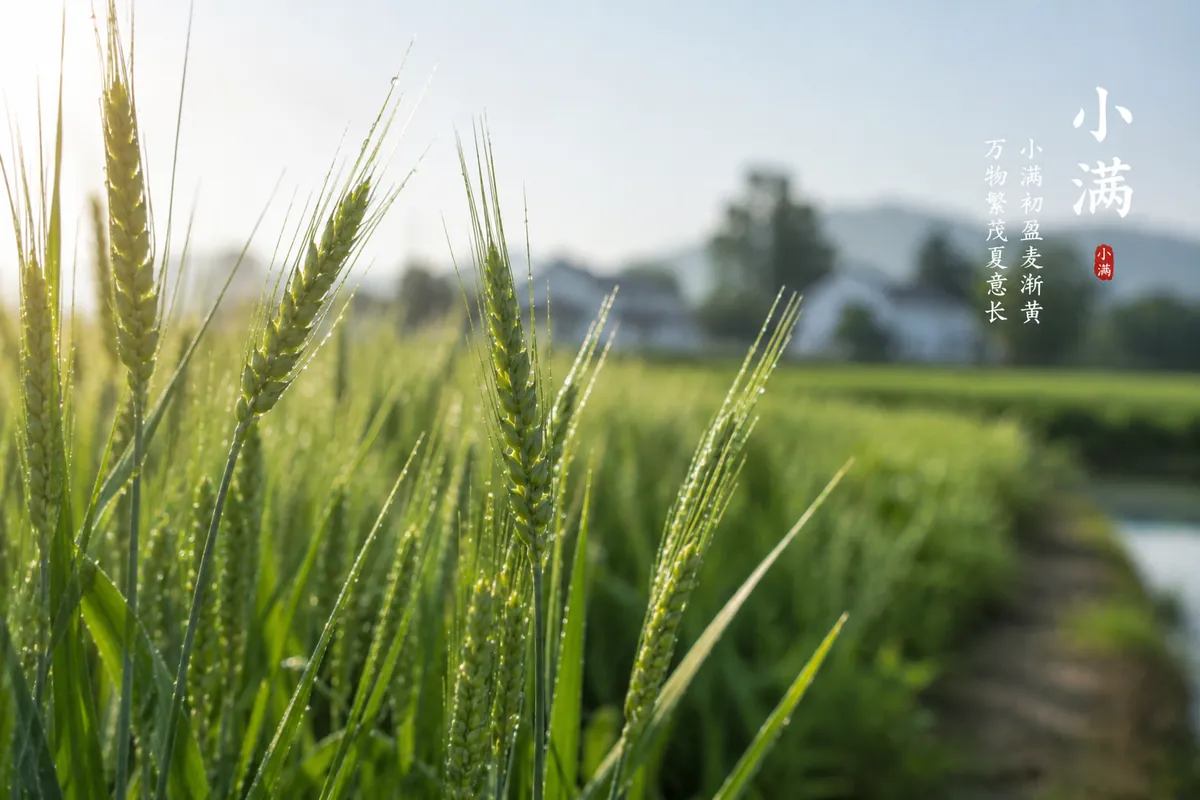
There is something quietly beautiful about the moment just before completion. The grain stalk is heavy with promise. The kernel is filling, rounding, turning golden at the edges — but not yet ripe. Not yet full. That in-between moment is exactly what 小满 (Xiǎomǎn) is named for.
The 8th of the 24 Solar Terms in the traditional Chinese calendar, Xiǎomǎn falls around May 21st each year. Its name translates literally as "slightly full" — and that deliberate understatement is the whole point. Grains have begun to fill, but the harvest has not come. Summer is building, but not yet blazing. It is a time of swelling potential, of things on the verge.
In TCM, this is also the season's hinge point. The cool, damp days of late spring are giving way to something heavier and stickier — and your body needs help navigating the shift.
🌾 The Pathogen of the Season: Dampness Rising
If there is one word that defines Xiǎomǎn in Chinese medicine, it is shi — dampness. This is the time of year when the rainy season begins across much of East Asia: warm air meets moist earth, humidity climbs, and the world feels thick.
For the body, dampness is particularly challenging because the Spleen — the organ TCM considers the master of digestion and transformation — has a natural aversion to it. Think of the Spleen as the body's drying engine: it transforms food and fluids into usable energy, sending nourishment upward and waste downward. Dampen that engine, and the whole system starts to feel sluggish.
You may recognise the signs: heavy limbs, foggy thinking, bloating after meals, low energy that sleep doesn't seem to fix. In TCM, these are classic markers of Dampness accumulating in the Middle Burner — and Xiǎomǎn is the time of year when that pattern is most easily triggered.
Protecting the Spleen now is not just about digestion. The Spleen also governs clear thought (its mental quality is yi, or focused intention), and when it is overwhelmed by dampness, the mind clouds along with the body.
🔥 The Fire Element Begins to Stir
At the same time, something else is awakening. The summer season — governed by the Fire element and the Heart — is not yet fully here, but it is making itself known. Longer days, warmer nights, a restlessness in the body that wants to move and expand.
The Heart in TCM houses the Shen — the spirit, consciousness, and the quality of one's sleep and mental presence. As Yang energy builds toward its summer peak, the Heart can begin to feel over-stimulated: trouble quieting down at night, irritability that seems to come from nowhere, a low-grade feeling of agitation.
Xiǎomǎn asks you to tend two fires at once — or rather, to keep one (the Spleen's digestive warmth) well-stoked while gently steadying the other (the Heart's ascending energy). It is a more nuanced balancing act than most solar terms demand.
🌿 Supporting Spleen and Heart Health This Season
1. Dietary Recommendations
The guiding principle at Xiǎomǎn is to eat lightly, eat warmly, and choose foods that actively help the body resolve dampness. Heavy, oily, or overly sweet foods feed the damp; simple, slightly bitter, and cooked foods clear it.
Dampness-Resolving Foods:
- Job's tears (coix seed / yi ren) — one of TCM's most celebrated dampness-draining foods
- Red adzuki beans — drain dampness and support the Heart
- Lotus seeds — calm the mind and strengthen the Spleen
- Bitter melon — clears rising Heat, keeps the Liver-Stomach axis smooth
- Barley, millet, and other easily digestible whole grains
→ Try our light summer recipe: Cold Three-Shred Salad
Heart-Calming, Mildly Bitter Foods:
- Dark leafy greens (bitter greens in small quantities clear rising Heart heat)
- Lotus root and lotus leaf tea
- Lily bulb (bai he) — a classic TCM Heart-calming ingredient
- Mulberries and strawberries — light, cooling, and nourishing to the blood
Foods to Limit:
- Raw, cold foods straight from the refrigerator — they douse the Spleen's digestive warmth
- Rich, greasy meats and deep-fried food — these generate both dampness and Heat
- Excessive sugar and dairy — both have a dampening, cloying effect in TCM
- Alcohol and highly spiced food — they stoke the Heart Fire prematurely
2. Lifestyle Practices
- Rise a little earlier: Yang energy is building; align with it by catching the morning hours before heat accumulates.
- Light, regular movement: A gentle walk, some Qigong, or a slow bike ride moves Qi through the body and prevents Dampness from settling — but avoid long, sweaty workouts in the heat of the day, which drain Heart Qi.
- Keep dry: Avoid sitting on damp ground or staying in wet clothes. This may sound obvious, but in TCM, external dampness absolutely compounds internal dampness.
- A short midday rest: Not a deep sleep — just 20 minutes of quiet to let the Heart settle during its peak hours (11am–1pm).
- Guard against over-stimulation: Loud spaces, intense screens before bed, emotionally charged conversations late at night — all of these stir the Heart at a time when it needs to begin winding down.
3. Environmental Harmony
- Prioritise good ventilation at home; stagnant, humid air feeds the damp pattern
- Natural fabrics (linen, cotton) keep the body breathing and prevent sweat from sitting on the skin
- Light, uncluttered living spaces reflect the season's invitation to simplify before summer fully arrives
- Morning sunlight exposure (even just 10–15 minutes) anchors the circadian rhythm and lifts Spleen Qi
🌱 Connecting with the Season's Energy
Nature at Xiǎomǎn is vivid and full of quiet urgency. Everything is growing — visibly, almost audibly — and the world feels thick with that barely-contained energy of things becoming.
The ancient Chinese observed three signs that mark this precise moment in the turning year:
- Bitter herbs grow vigorously — plants with heat-clearing and dampness-resolving qualities shoot up, as if nature were already preparing its own remedy
- Weeds and shade-loving plants die back — Yin energy begins to yield as Yang ascends; the strong light of late spring does its work
- Wheat begins to ripen — the very grain that names this solar term arrives at its own moment of almost-fullness, pointing toward the harvest ahead
There is something worth sitting with in the concept of xiao man — slight fullness, not-yet-complete. In a world that celebrates arrival and achievement, this solar term praises the in-between. The grain that is still becoming. The season that has not yet peaked. The person who is still tending, still patient, still trusting the process.
TCM has always understood that the moment before fullness requires the most careful tending. Push too hard now and you exhaust the Spleen before summer even arrives. Rest too long and the dampness settles in. The invitation of Xiǎomǎn is to hold that middle line with intelligence and care — nourishing what is growing, protecting what is still fragile, and trusting that the fullness is coming.
Further Reading
This article is part of the 24 Solar Terms series, exploring the traditional Chinese calendar and its wisdom for modern living.