There is a moment every November when the air goes from crisp to cold in a single afternoon. You reach for a second sweater, your lower back begins its seasonal protests, and nothing — not tea, not a blanket, not even a hot shower — seems to warm you all the way down to the bone. In TCM, that feeling has a name, a cause, and a kitchen remedy that has been simmering away in Chinese households for well over two thousand years.
That remedy is lamb — 羊肉 (yángròu) — and if beef is TCM's quiet general tonic, lamb is its fire stoker.
💡 Who Has Traditionally Turned to Lamb?
In TCM, lamb is most strongly associated with Yang deficiency (阳虚, yáng xū) — a pattern in which the body's warming, activating energy is insufficient. Yang is the force that keeps us warm, drives movement, and sustains the vital fire of metabolism. When Yang runs low, the world starts to feel a size too cold. This is not a medical diagnosis; it is the conceptual framework TCM has used for centuries to describe a recognisable cluster of experiences.
People who have traditionally turned to lamb more deliberately in their diet often describe some of the following:
- Persistent cold — in the hands, feet, lower back, and knees even in mild weather — the classic TCM picture of Yang deficiency failing to warm the extremities and the Kidney domain
- Low energy that feels fundamentally different from ordinary tiredness — as if the pilot light is turned down, not simply unlit
- A dull ache in the lower back or knees that worsens in cold weather — the Kidneys govern the lower back in TCM, and cold "attacking" deficient Kidney Yang is a pattern recorded in classical texts for millennia
- Prolonged recovery after illness, childbirth, or intense physical effort — states in which the body's Yang has been consumed faster than it has been replenished
- Diminished appetite and sluggish digestion in the cold months — Yang warms the Spleen's digestive fire; when Yang is low, so is the appetite
Lamb is not a treatment for any of these experiences — and this is not a basis for self-diagnosis. In TCM dietary medicine, lamb is simply one of the most tonifying and warming whole foods that can be included over the long winter months for those whose body naturally runs cold.
🌿 The TCM Perspective: Fire for the Kidneys
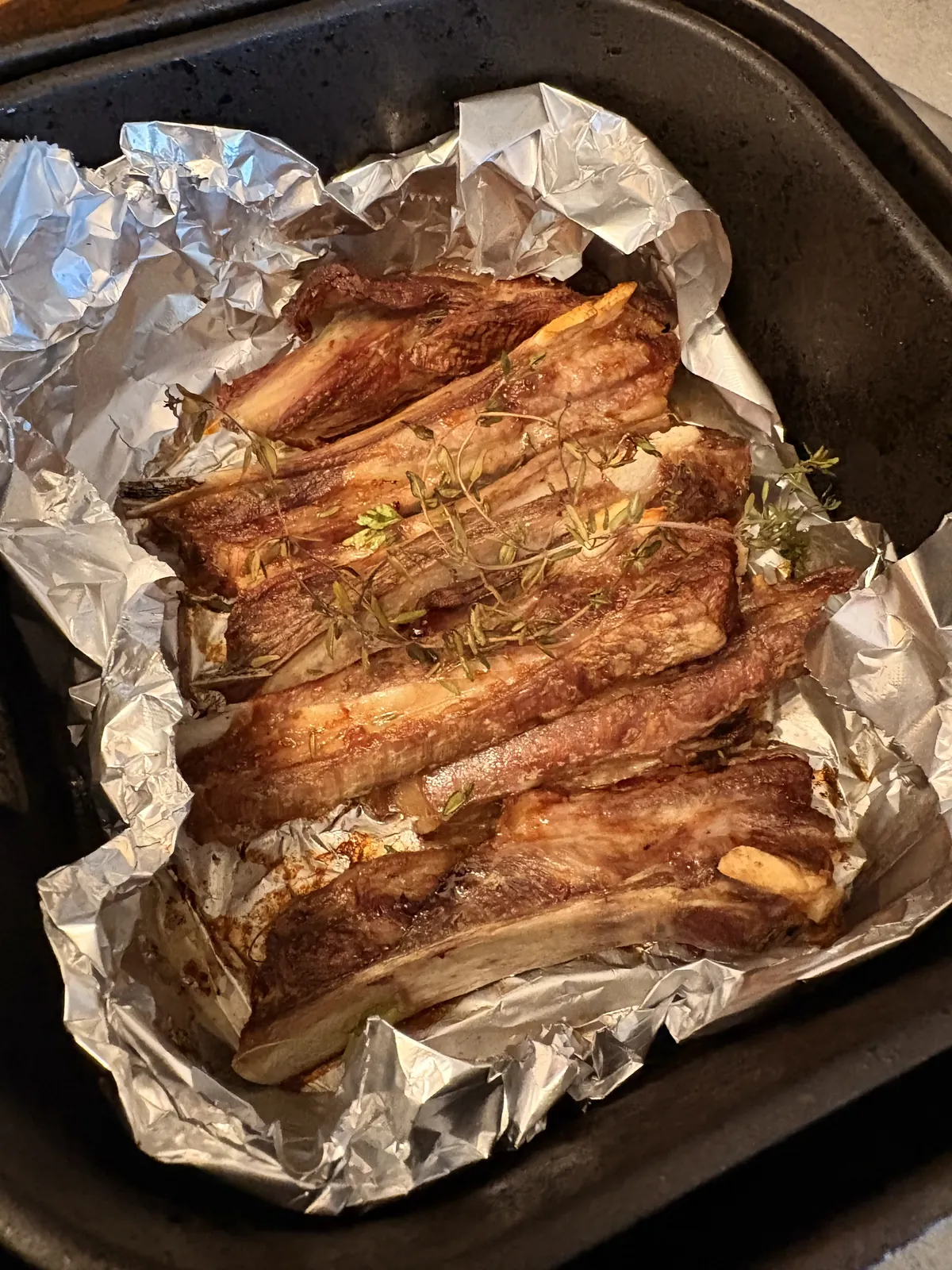
If you look at TCM's classification of animal foods by temperature, lamb sits at one end of the warming scale — markedly more warming than chicken, considerably more warming than beef, and classified alongside ginger and pepper as a food that genuinely adds heat to the system. This is not a metaphor. In the TCM understanding of food as medicine, thermal nature is a functional property: a warm food actively moves Yang Qi through the channels and into the Kidney domain, the seat of the body's deepest energetic reserves.
The classical texts are unusually enthusiastic about lamb. Li Shizhen, writing in the Bencao Gangmu (本草纲目, 1596), recorded its action as "暖中补虚,益肾气" — "Warms the centre and replenishes deficiency, benefits Kidney Qi." The Sui Xi Ju Yin Shi Pu (随息居饮食谱, Qing Dynasty) goes further: "最补元阳,益劳损" — "The supreme supplement to primordial Yang; benefits exhaustion and depletion." The Suwen (素问, foundational chapter of the Huangdi Neijing, c. 200 BCE–200 CE) lists lamb among the five nourishing animal foods, connecting it to Fire, the Heart, and the warming, activating current that runs through the body's energetic economy.
What makes lamb's TCM profile distinctive — and clinically specific — is that it does not merely tonify Blood the way neutral foods do. It warms the Blood as it nourishes it. For someone who is cold and depleted, that combination is more targeted than any neutral tonic could be.
TCM profile at a glance:
- Flavour: Sweet
- Nature: Warm (温, wēn), tending toward hot
- Organ systems entered: Spleen (脾), Kidney (肾), Heart (心)
- Traditional role: Traditionally included in diets aimed at tonifying Yang and warming the Kidneys (温肾补阳), nourishing Blood and replenishing deficiency (补血益虚), and warming the Spleen's digestive centre; particularly associated with cold constitutions, winter use, postpartum depletion, and lower-back weakness
Lamb is a particularly rich source of haem iron — the highly bioavailable form of iron found only in animal tissue — and studies confirm that between 65–76% of lamb's total iron exists as haem iron, a proportion maintained even through grilling.[1] A systematic review and meta-analysis of ten intervention trials found that increasing red meat intake significantly raised haemoglobin concentrations in adults with suboptimal iron status, with meaningful improvements in ferritin stores when the dietary change was sustained for at least eight weeks.[2] This evidence aligns precisely with lamb's classical TCM designation as a blood-nourishing and blood-warming food.
A large multiethnic dietary survey confirmed that red meat is the single most important dietary contributor to vitamin B12 and a significant contributor to both iron and zinc intake — no single plant food matches all three simultaneously in quantity or bioavailability.[4]
🔬 What the Research Shows
Lamb's iron is highly bioavailable. Up to three-quarters of the iron in lamb is haem iron, absorbed through a dedicated pathway that is unaffected by the phytates and polyphenols that block plant-based iron.[1] Trials confirm that increasing red meat intake raises haemoglobin in adults with low iron stores — the direct modern parallel to lamb's classical role as a blood-nourishing food.[2]
A single serving delivers protein, zinc, and B12 together. Lamb provides all nine essential amino acids at maximum quality,[3] roughly half the adult daily zinc requirement in a highly bioavailable form,[4] and enough B12 to meet or exceed the adult daily requirement. Zinc supports every branch of the immune system — what TCM describes as Wei Qi (卫气) — and even mild deficiency measurably weakens the body's defences.[5]
Lamb is one of the richest dietary sources of vitamin B12. A meta-analysis confirmed that low B12 intake produces measurable neurological harm, from elevated homocysteine to cognitive decline that may be irreversible when prolonged.[6] This maps directly onto lamb's classical TCM action of "supplementing Kidney Essence and nourishing the Marrow" (补肾益髓).
🥣 How to Use Lamb
Lamb is at its best when cooked slowly and patiently — long-braised with warming spices, simmered into a rich winter broth, or roasted on the bone until the meat falls away. TCM tradition pairs it with ginger, black pepper, and Chinese angelica root (danggui, 当归) in winter tonifying soups and stews that are as deeply satisfying as they are nourishing. For recipes using lamb, see:
A Note on Quantity and Caution
A serving of lean lamb two to three times per week over the winter months is well within what most healthy adults can include comfortably as part of a varied diet. The key qualifiers are lean and unprocessed — a slow-braised shoulder, a grilled chop, or a hearty broth are nutritionally very different from cured or processed lamb products, and TCM dietary logic has always favoured gentle, whole-food preparations over intensely processed forms.
Lamb's warming nature is also a meaningful caution. TCM advises against lamb — or recommends using it sparingly and balancing it with cooling vegetables — in the following situations:
- Yin deficiency with Heat signs — if you run naturally warm, sweat easily, feel thirsty often, or have a tendency toward inflammation or skin redness, lamb's warming nature may add fuel to an already too-warm fire
- Active fever or acute infection — warming foods are generally set aside during febrile illness in TCM
- Pregnancy with excess Heat — lamb in broth with ginger is a common postpartum food, but during pregnancy in warm constitutions it is used with more care
As with all food-medicine in TCM: the goal is consistency and calibration over the long term, not excess at any single sitting. Lamb works by steadily replenishing what the cold months draw down — which is, after all, exactly what fire is for.
📚 Further Reading
There is a kind of wisdom in reaching for warmth — not the artificial warmth of a thermostat, but the deep, metabolic warmth that comes from feeding the body what it genuinely needs. Lamb has held its place in Chinese dietary medicine for more than two thousand years not because of marketing or fashion, but because practitioners watched through generations of cold winters and noticed that it worked — that people who ate lamb broth in January moved differently in March. Let science add its own precise language to what they already knew. And when November turns sharp, let the pot come out.
📖 References
- Olmedilla-Alonso, B., et al. (2013). Heme iron content in lamb meat is differentially altered upon boiling, grilling, or frying. The Scientific World Journal, 2013, 205353. https://doi.org/10.1155/2013/205353
- McManus, L., et al. (2025). Effect of Increasing Red Meat Intake on Iron Status in Adults with Normal and Suboptimal Iron Status: A Systematic Literature Review and Meta-Analysis of Intervention Studies. Nutrition Reviews, 83(8), 1389–1402. https://doi.org/10.1093/nutrit/nuaf016
- Stadnik, J. (2024). Nutritional Value of Meat and Meat Products and Their Role in Human Health. Nutrients, 16(10), 1446. https://doi.org/10.3390/nu16101446
- Sharma, S., Sheehy, T., & Kolonel, L. N. (2013). Contribution of meat to vitamin B12, iron and zinc intakes in five ethnic groups in the USA: implications for developing food-based dietary guidelines. Journal of Human Nutrition and Dietetics, 26(S2), 156–168. https://doi.org/10.1111/jhn.12035
- Wessels, I., Maywald, M., & Rink, L. (2017). Zinc as a Gatekeeper of Immune Function. Nutrients, 9(12), 1286. https://doi.org/10.3390/nu9121286
- Alruwaili, M., et al. (2023). Neurological Implications of Vitamin B12 Deficiency in Diet: A Systematic Review and Meta-Analysis. Healthcare, 11(7), 958. https://doi.org/10.3390/healthcare11070958