In TCM, beef builds Spleen Qi and nourishes Blood, while asparagus clears Lung Heat and gently tonifies Yin — together they strike the spring balance between building and clearing that the season asks for.
🌿 What makes this dish special?
Spring brings asparagus — and in TCM, that timing matters. Asparagus enters the season when Yang energy is rising and excess Heat can accumulate in the body. Its cool, clearing nature makes it a natural counterweight: it benefits the Lungs, nourishes Yin, and keeps the upward rush of spring energy from tipping into irritability, dry throat, or restlessness.
Beef does the opposite work. It is one of TCM's premier Blood-building foods — warming, substantial, grounding. Where asparagus clears, beef builds. Where asparagus moves upward and outward, beef anchors.
Put them together at high heat in a wok and you have a spring dish that earns its place on the weekly rotation: fast enough for a weeknight, nuanced enough to feel deliberate. The technique does most of the heavy lifting — marinating the beef so it stays tender, giving the asparagus a brief braise to coax out its flavour, then reuniting everything over the highest heat you can manage for a final minute of wok breath (锅气) that no other cooking method replicates.
Key Ingredients
- Beef (牛肉) — Tonifies Spleen and Stomach Qi, strengthens the muscles, and builds Blood. One of the few red meats in TCM considered appropriate for regular — not just occasional — eating, especially in seasons of transition.
- Asparagus (芦笋) — Clears Lung Heat, gently nourishes Yin, and benefits the Kidneys. Its spring appearance aligns it with the season's upward Yang energy, making it the ideal vegetable for this period.
- Ginger, Garlic & Spring Onion (姜蒜葱) — The classic aromatic trio that warms the Stomach, activates digestion, and ensures the dish's cooling and warming elements work together rather than against each other.
🥢 Recipe: Stir-fried Beef and Asparagus
Ingredients (for 2 servings):
- 300 g beef sirloin or flank, thinly sliced against the grain
- 300 g green asparagus, woody ends removed, cut into 5 cm pieces
- 3 slices fresh ginger
- 3 cloves garlic, thinly sliced
- 2 spring onions, cut into sections
- 1 tbsp Shaoxing rice wine
- Neutral oil for frying
Marinade:
- 1 tbsp oyster sauce
- 1 tbsp light soy sauce
- ½ tsp sugar
- 1 tsp cornstarch
Sauce:
- 1 tbsp oyster sauce
- 1 tbsp light soy sauce
- 3 tbsp water or light stock
- 1 tsp cornstarch mixed with 2 tbsp water
- 1 tsp sesame oil (to finish)
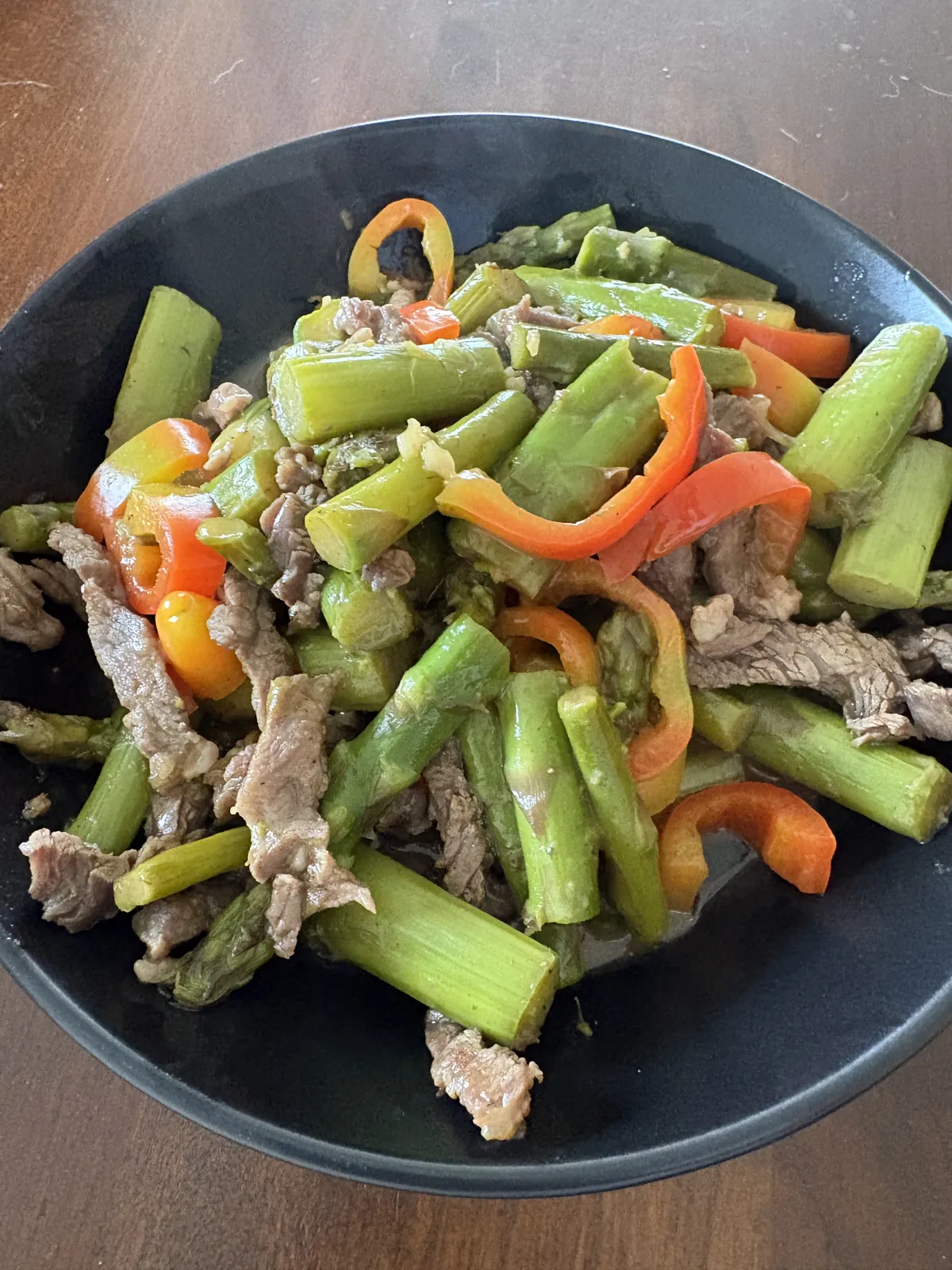
Instructions:
- Mix together the marinade ingredients. Add the beef strips and toss well to coat. Leave to marinate for 10 minutes while you prepare everything else.
- Snap or trim the woody ends off the asparagus. If the stalks are thick, peel the lower third with a vegetable peeler — it makes them noticeably more tender. Cut into 5 cm pieces.
- Heat a wok or heavy frying pan over the highest heat available. Add 2 tbsp neutral oil. When the oil just begins to smoke, add the ginger, garlic, and spring onion. Stir-fry for 15 seconds until fragrant.
- Add the marinated beef in a single layer. Leave untouched for 20 seconds, then stir-fry on high heat for 30–40 seconds until half-cooked. Splash in the rice wine, toss briefly, then transfer the beef to a small bowl. Set aside.
- Return the wok to the heat. Add a touch more oil if needed. Add the asparagus and stir-fry for 1 minute. Add the oyster sauce, soy sauce, and water or stock. Reduce heat slightly, cover, and braise for 8–10 minutes until the asparagus is just tender but still bright green and firm.
- Return the beef to the wok. Crank the heat back to maximum. Stir-fry everything together for 1 minute.
- Pour in the cornstarch slurry and toss quickly until the sauce thickens and coats everything in a light gloss. Drizzle with sesame oil. Serve immediately with steamed rice.
💡 Insider Tip: Peel the lower third of thick asparagus stalks — it removes the fibrous outer layer and makes the whole piece uniformly tender. And don't skip the maximum heat at the end: that final 60 seconds over a blazing flame is what produces wok hei (锅气), the elusive slightly smoky, charred edge that distinguishes a restaurant stir-fry from a home pan-fry.
🌸 Conclusion: Spring in 25 Minutes
Stir-fries are the everyday backbone of Chinese home cooking — not ceremonial dishes, not slow tonics, just honest high-heat cooking that respects good ingredients and gets out of the way. This one earns its spot in the spring rotation because everything about it fits the season: the asparagus is at its peak, the beef provides substance without heaviness, and the whole dish is on the table before the impulse to order takeaway can take hold.
In TCM terms, it builds without burdening and clears without depleting — the balance the season asks of us. That is worth coming back to all spring long.
Further Reading
This recipe combines traditional TCM wisdom with modern culinary techniques. All ingredients should ideally be organic and of high quality.